
Driving is not just as a mode of transportation, but a method for studying the urban-rural periphery. Unlike walking, driving reorganizes observation through a different relationship to time and space. It makes distance traveled, travel time, and variation in infrastructural services central to the study of rural governance.
By Allison Evans
Did I want to drive a car? No. Did I need to drive a car? Yes. And especially if I wanted to access the rural spaces and people at the center of my dissertation research on housing precarity in the urban-rural periphery, where distances and driving greatly shape everyday life.
Until this moment of reckoning in fall 2025, I hadn’t exactly considered how I was going to move between a streetcar suburb of Toronto and a small town located about 2.5 hours north-east. Public transportation was not a great option, mostly because there really isn’t any, and especially since I needed to drive around not only to observe everyday life, but to reach my accommodations, to meet respondents, and to attend local events across a wide geographic area. I’d spent the better part of my adult life avoiding cars (and car dependency) for various reasons, with cost and environment at the top of the list. Nor had I considered how walking, given the dispersed “urban” design of rural Ontario, would take a back seat to driving in my everyday research activities. More than a logistical necessity, however, driving has become part of the methodological conditions of the research itself, shaping what and who could be encountered and how space was experienced in the field.
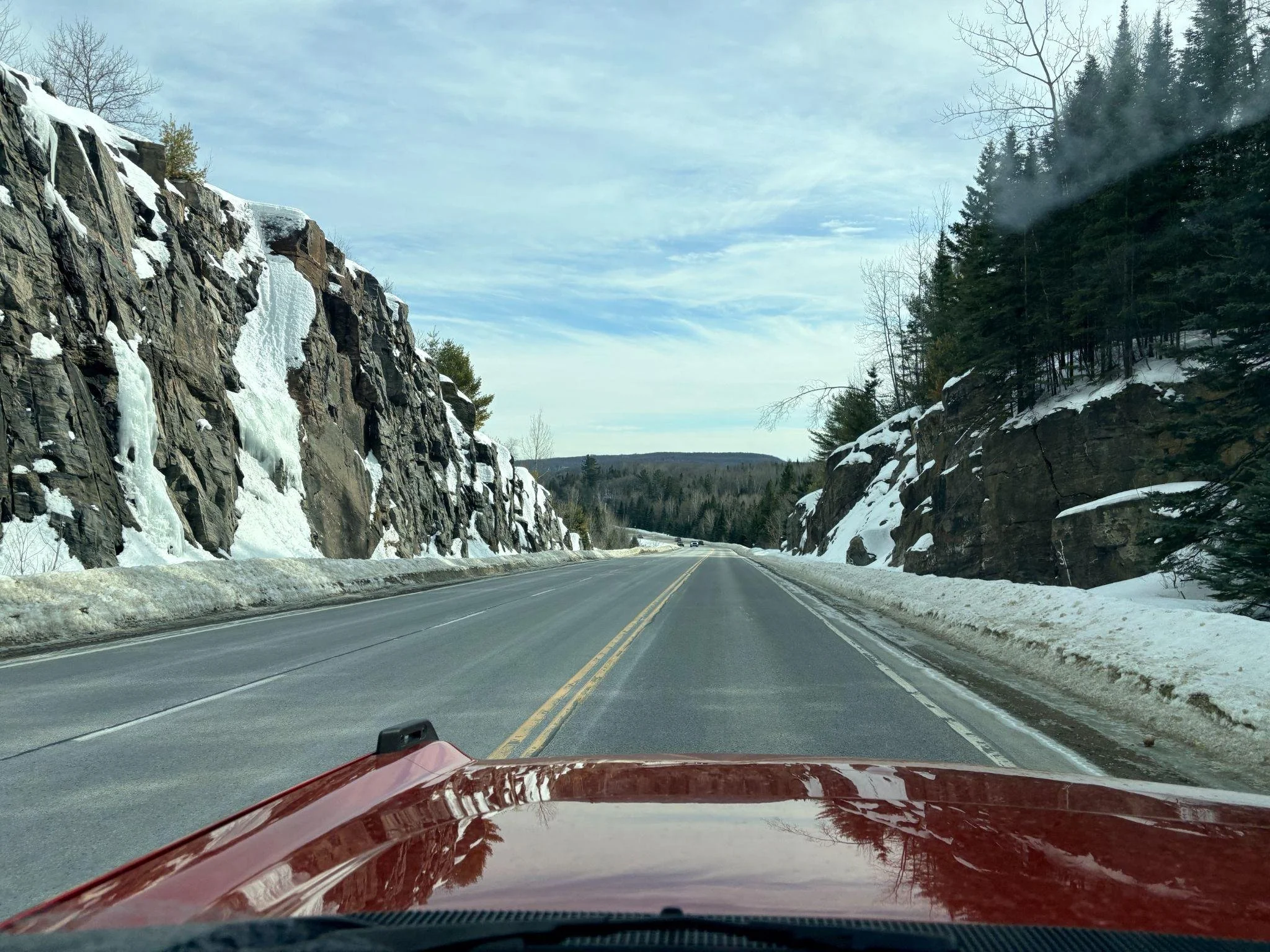
Figure 1: Driving through a winding, hilly rock cut in the Canadian Shield on a highway between two small towns, this arterial road is a primary North–South route in East-Central Ontario and remains part of the province’s road network. In the mid- to late 1800s, these roads moved settlers from the urbanized south into the hinterlands of the North. (Source: Author)
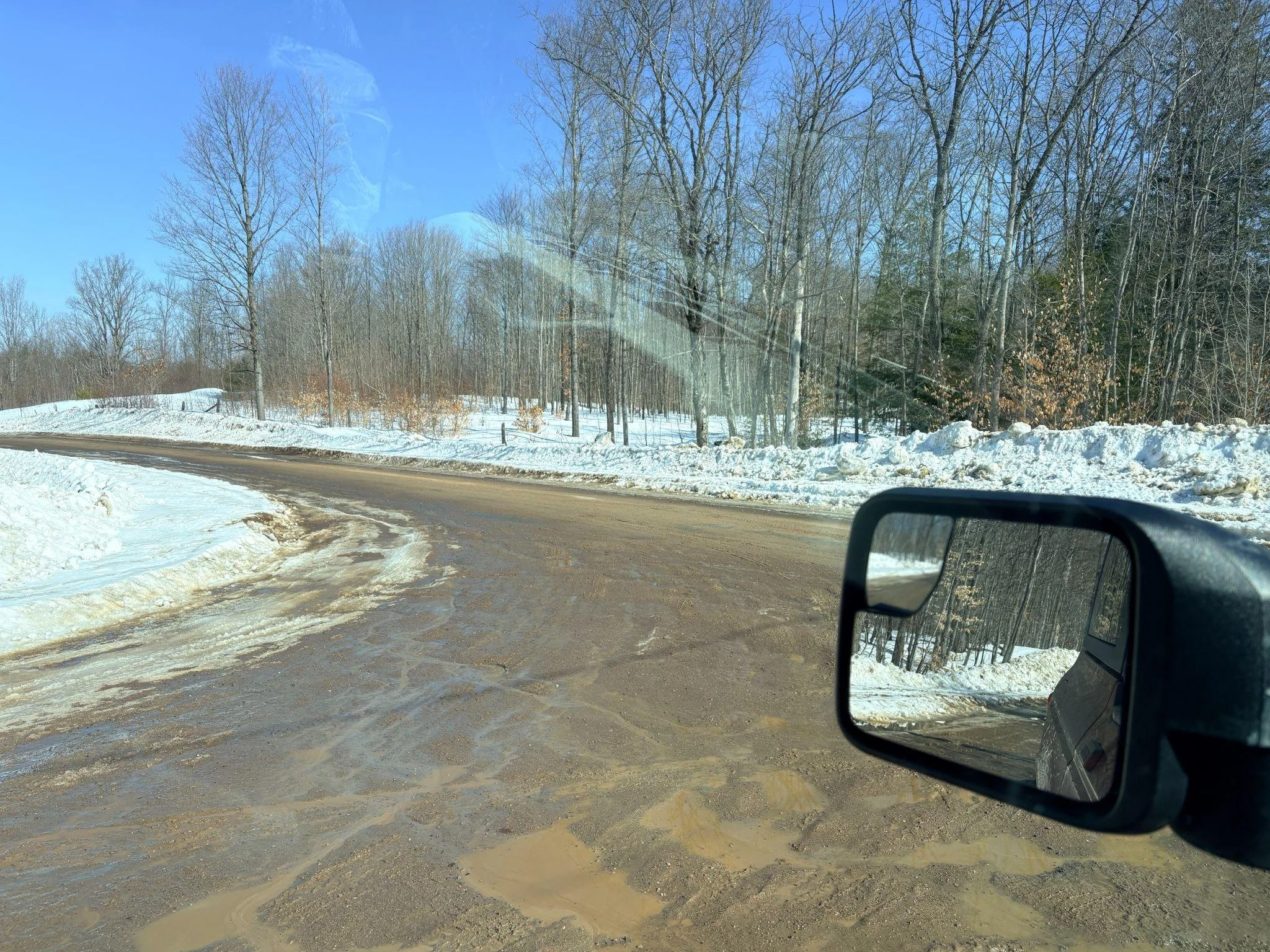
Figure 2: A fork in a muddy, unpaved rural road in the regional network, usually lined with dispersed residential dwellings and linking small settlements and service nodes into the broader provincial system. Many of these roads are local traffic only, and paving is often not considered cost effective, especially where development pressures are lower compared to the roads in more urbanized areas. (Source: Author)
As an urban planning student, I had long understood “walking the city” as method. For example, De Certeau’s classic writings on walking as the “elementary form” of experiencing the city, echoed in Kusenbach’s walk-alongs, Whyte’s street-level observations, and Jacobs’ sidewalk ballet, as a few examples. Each depicts, in different ways, knowing the city through strolling and observation. However, these approaches presume forms of proximity and density that do not hold in dispersed rural contexts, where walking is not usually the primary mobility to move through space and time.
As I drove through my rural small-town field site, I began asking myself HOW I would be able to observe or experience anything from the driver's seat, moving at speeds of at least 40 kilometers per hour. How would I focus on anything except driving? This bodily shift from walker to driver required a reconsideration of how I would perceive and experience the field. I could still walk around the more compact downtown area, but the majority of my experience of this place unfolded from the driver’s seat. Like any good (burgeoning) academic, I started searching for what others have written on the topic. I quickly learned from Wegerif that social science research rarely considers — or teaches — transportation choices as part of research design.
However, mobile methods have been considered since at least the early 2000s, when scholars like Urry, Thrift, and Latimer and Munro, amongst others, debated how cars alter time-space relations, represent complex social practices, and shape how everyday unfolds and is observed from behind the wheel. More recently, Lynch again noted how driving and walking aren’t all that different – both are sensorial experiences of time and place. Similarly, Wegerif argued that the experience of driving opens up intellectual and emotional spaces, similar to those associated with walking. Likewise, of their experience with driving as method in a rural part of Australia, Drew et al. found that although the body is contained within the car’s interior, movement generates an “outer space” of perception, particularly of landscapes.
Simply put, driving (compared to walking) transforms perception without foreclosing the possibility of observation. It reorganizes how conditions are encountered, bringing some into view while leaving others obscured. For example, driving made perceptible aspects of rural governance that might otherwise remain abstractions. Living with my “dissertation parents” outside town meant crossing three municipal jurisdictions daily. Differences in road maintenance became a material reminder of the fragmented governance structures I heard about in interviews.
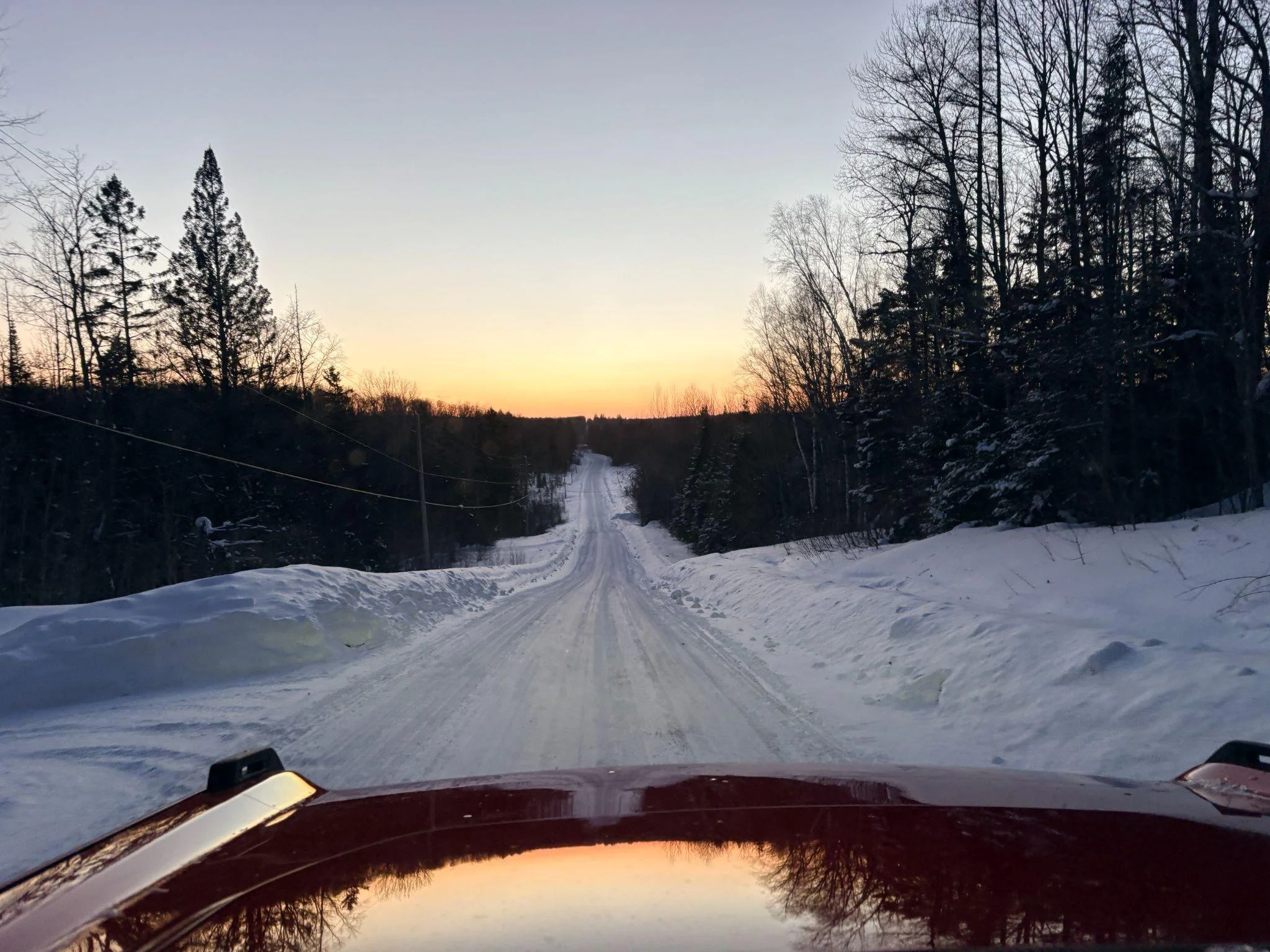
Figure 3: My version of ice road trucking. Winter travel on regional roads was often treacherous, especially during and after a snowfall, when icy patches formed on the snowpacked surfaces. Conditions also often shifted quickly, and a sunny day could morph into a blizzard, and often without warning. Careful trip planning was essential. (Source: Author)
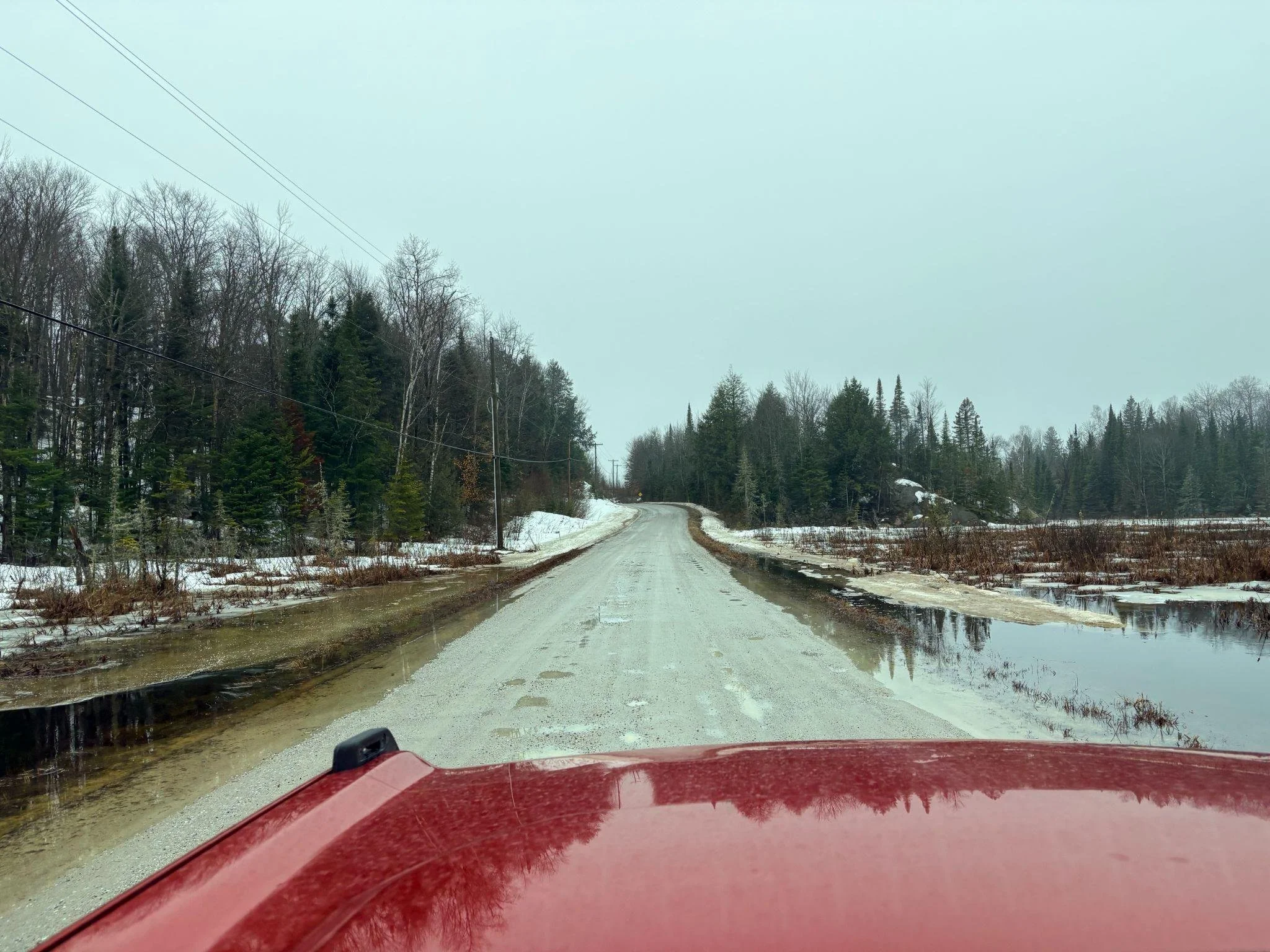
Figure 4: Hello spring! The winter thaw softens the soil and swells wetland areas, and rivulets are common on hills, creating deep ruts. Road washouts and erosion are common at this time of year and are typically addressed through calls to the municipality resulting in gravel and grading. And, at worst, being stuck on one side when you need to access the other. (Source: Author)
Driving was not merely how I arrived at the field. It was part of the field itself. Hours on the road structured my access to the places and people and shaped what encounters were possible, and especially during this snowy winter, which were not. Driving also reshaped how I perceived distance, space, isolation, and community. Landscapes unfolded through my windshield rather than literally beneath my feet. Instead, my feet press pedals rather than the ground, yet they still mediate an experience of place and, more importantly, how others also experience rural space-time – what Hughes refers to as an embodied practice.
My car had thus become a space of observation, reflection, and improvisation. Voice notes recorded during drives capture these fleeting thoughts and moments, while my digital assistant — “Siri, I said a reminder not a note” — has become an oddly familiar part of my research routine – alongside the sparing use of my cell phone camera.
My fieldwork also includes transecting what is one of the longest counties in Canada, mostly organized — where nature permitted — around the historical grid pattern used to subdivide land into farmsteads and other parcels. Road names like “colonization” and “settlement” are interspersed with Indigenous words, a reminder of the legacies of private property and state sovereignty and how they are upheld here in Canada. Other roadside signs direct property owners to forestry management plans to “axe the tax”, a similar catchphrase used in populist rhetoric against the federal Liberal Party’s environmental policy by Progressive Conservatives. Meanwhile, the local roads are practically impassable, especially during the spring thaw.
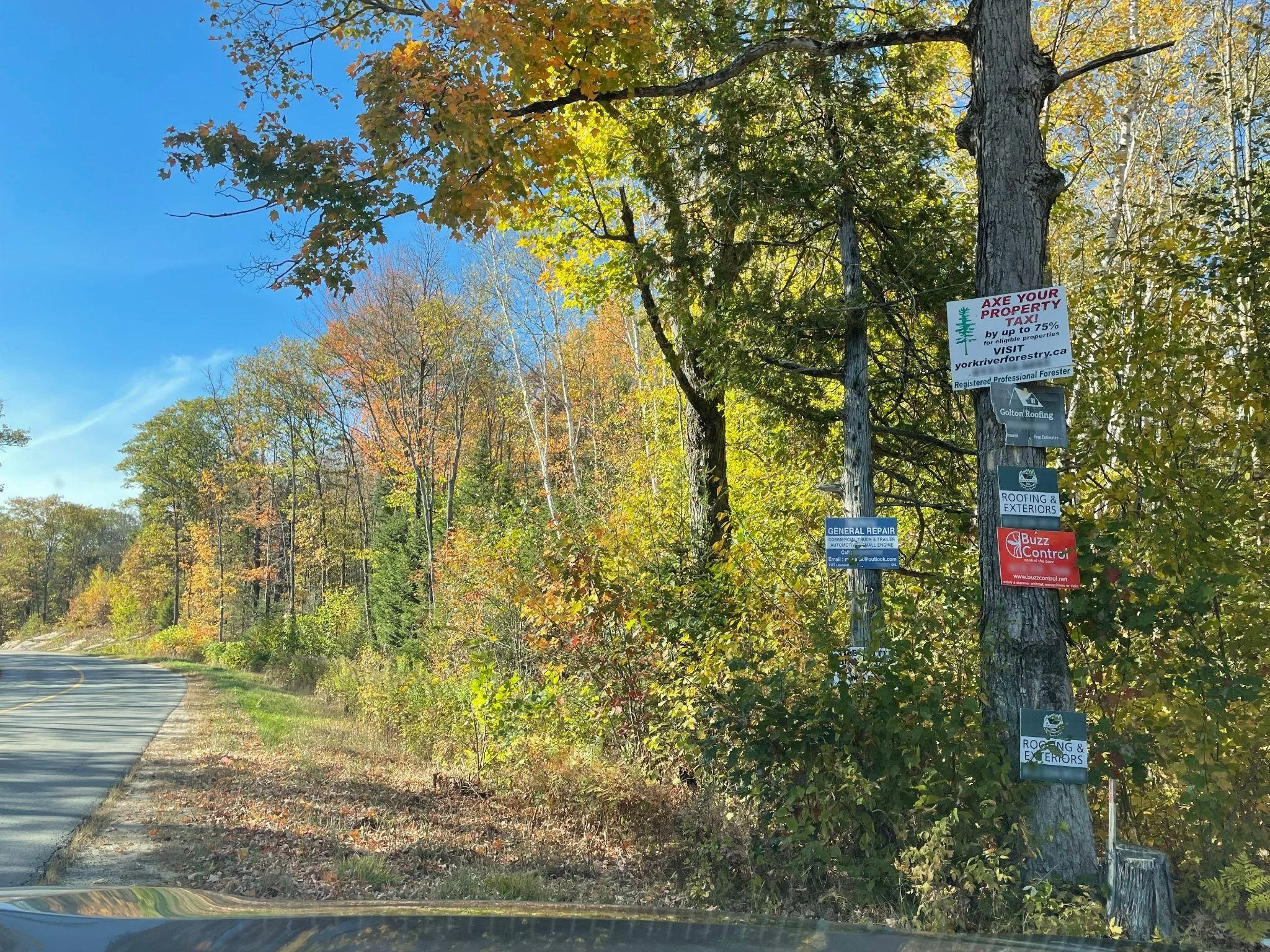
Figure 5: The “sign tree” I pass on trips into town: advertisements for bugs, roofs, and property tax savings. Similar sign trees are located on many roads, often interspersed with real estate offerings and local events and services, reminding me of bulletined electrical poles in cities. (Source: Author)
Driving, less occasionally, became a shared ethnographic space and practice. Scholars describe how “drive and talks”, as adapted from walking methods, allow people to show rather than simply describe their landscapes and spatial histories. This "captive" space, as Wegerif notes, raises some ethical issues, yet can be generative of meaningful conversations. From my experience, however, I prefer the passenger seat in these moments, allowing fuller attention to stories and surroundings.
On a typical day? I drive by myself. I wind along scenic roads that lead me through lush forests and cerulean lakes, punctuated by the odd rustic cottage, reinforcing images of wilderness and leisure — let alone conjuring memories of Lefebvre’s implosion-explosion.
Yet these landscapes mask what interviews and statistical analysis reveal as highly polarized, and poverty and housing insecurity exist just beyond the roadside. As Mitchell has argued, aesthetic landscapes often conceal the labor and inequality that sustain them. However, elements of inequalities also come into view from the road, even if partial. The automobile itself embodies these socio-economic contradictions: both a costly necessity and an everyday infrastructure of rural life. Without a car, the time-space constraints of walking or biking become barriers to essential activities, such as grocery shopping, employment, or accessing primary care. With the current cost of gas at $1.75 per liter, the costs of driving quickly add up. For many, it is simply not an option, yet neither is walking or biking.
Driving, then, is not simply a way of getting to the field, it is a way of knowing it — producing new subjectivities such as the “driver-researcher” I have come to embody throughout my fieldwork, as well as shaping the everyday lives and experiences of my interlocutors. Hughes has argued that British rurality is not simply a landscape or a discourse, but something activity (re)produced through social practices, especially driving. As I can relate, what we understand about rurality is often, and especially to the outsider, experienced through vehicular motion.
ALLISON EVANS is a PhD candidate in City & Regional Planning at the University of California, Berkeley. Her dissertation research examines housing precarity and houselessness in semi-rural Ontario, Canada, focusing on how regional economic change shapes local responses in smaller, resource-constrained communities. She is broadly interested in housing questions, and her past research includes student housing shifts, regulatory ambiguity, and urban informality in Toronto, as well as housing precarity in rural California. Her current work engages debates around urban governance and urban–rural divides. While this blog post focuses on her experiences driving through rural areas as part of her current fieldwork, she is also interested in questions of rural transportation access and mobility.
